
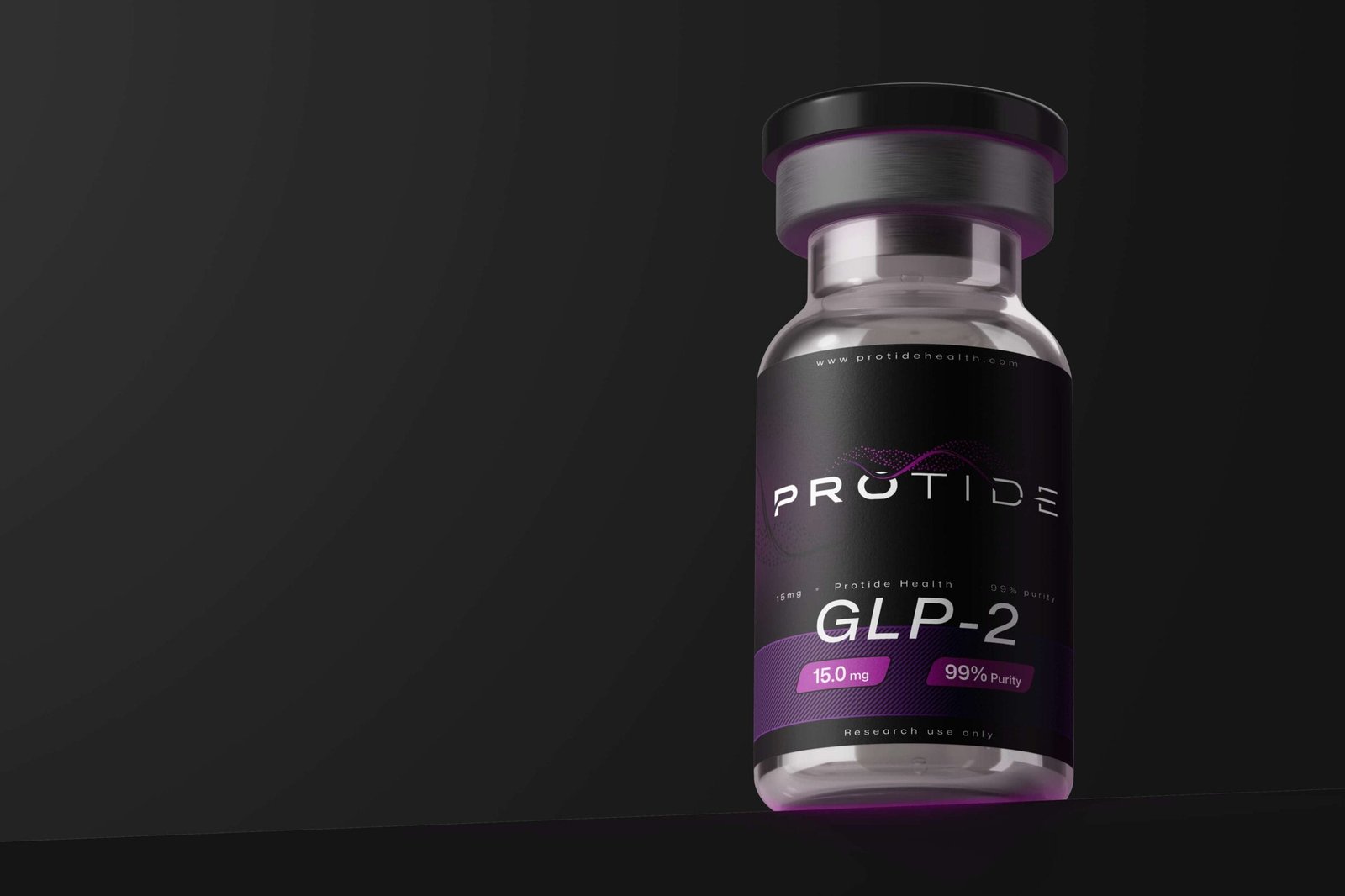
GLP-2 15mg
$139.00
GLP-2, a dual GLP-1 and GIP receptor agonist, has been studied for its potential impact on metabolic health, weight management, and insulin sensitivity. Research has explored how this dual acting compound may influence appetite regulation, fat metabolism, and glucose control areas of growing interest in obesity and metabolic disorder studies.
🔥 Exclusive Crypto Offer
Get an INSTANT 15% DISCOUNT when you pay with Bitcoin, Ethereum, Dogecoin, Bitcoin Cash, XRP, Solana, or USDT.
⚡ Don't have crypto? Buy it here in 5 minutes with easy guidance.
Buy GLP-2 15mg Online – GLP-2 15mg for Sale (In Stock)
Looking to buy GLP-2 15mg for your research? At Protide, our GLP-2 15mg is currently in stock and ready for immediate dispatch. We specialize in high-purity compounds designed for rigorous laboratory standards.
GLP-2 15mg: Comprehensive Research Overview
What is GLP-2?
GLP-2 (LY3298176) is a synthetic peptide engineered for laboratory research, functioning as a dual-agonist targeting glucagon-like peptide-1 (GLP-1) and glucose-dependent insulinotropic polypeptide (GIP) receptors. This 39-amino-acid peptide is modified with a C20 fatty diacid moiety via acylation technology, extending its research-ready half-life to approximately five days.
This prolonged stability, combined with its ability to engage both GLP-1 and GIP receptors, positions GLP-2 as a powerful tool for preclinical studies investigating metabolic disorders and tissue repair processes. Unlike selective GLP-1 receptor agonists, GLP-2’s dual agonism, often termed a “twincretin,” offers synergistic effects on glucose homeostasis, lipid metabolism, and appetite regulation.
Each 15mg vial from Protide Health is supplied as a high-purity, lyophilized powder for controlled laboratory reconstitution. To ensure precise protocol design, investigators can utilize the peptide dosage calculator.
-
Peptide Architecture: Synthetic 39-amino-acid peptide based on a modified GIP sequence.
-
Vial Content: 15mg lyophilized powder for research reconstitution.
-
Pharmacokinetics: C20 fatty diacid conjugation supports once-weekly dosing in models.
-
Primary Focus: Metabolic health, glucose handling, and adipose tissue function.
Chemical and Structural Properties of GLP-2 Peptide
GLP-2 is a synthetic analog of the native GIP sequence, modified to activate both GIP and GLP-1 receptors with high potency. Its structure includes a C20 fatty diacid linked via a spacer, enabling strong albumin binding in plasma, which prolongs its half-life and supports consistent exposure in animal models.
The peptide is lyophilized for stability, requiring storage at -20°C or below to maintain bioactivity during extended experimental protocols. Preclinical studies have shown that GLP-2’s affinity for GIP receptors is comparable to native GIP, while its affinity for GLP-1 receptors is approximately five times weaker than native GLP-1, creating a unique imbalanced dual-agonist profile. PubMed
-
Format: Lyophilized for stability at -20°C or lower.
-
Molecular Modification: C20 fatty diacid conjugation extends half-life to ~5 days.
-
Receptor Affinity: Imbalanced dual agonism with comparable GIP and reduced GLP-1 receptor affinity.
Mechanisms of Action
GLP-2’s dual agonism of GLP-1 and GIP receptors underpins its efficacy in preclinical research, enabling modulation of metabolic and regenerative pathways. The peptide’s ability to engage both incretin hormone receptors produces synergistic effects on insulin secretion and lipid metabolism.
-
GLP-1 Receptor Agonism: Stimulates glucose-dependent insulin secretion from pancreatic beta cells, suppresses glucagon release, and reduces food intake in models. Molecular Metabolism
-
GIP Receptor Agonism: Enhances insulin secretion and improves lipid clearance in adipose tissue. Preclinical studies demonstrated reduced triglyceride levels and increased lipoprotein lipase activity. Cell Metabolism
-
Adipocyte Nutrient Metabolism: Modulates post-prandial lipid clearance into adipose tissue, reducing ectopic lipid deposition.
-
Anti-Inflammatory Effects: Reduces inflammatory markers, supporting tissue repair. A 2025 study showed decreased hepatic inflammation in MAFLD mouse models. Lipids in Health and Disease
GLP-2 Peptide Research
1. GLP-2 and Metabolic Health Models
GLP-2 reduced body weight by up to 20% in diet-induced obese (DIO) mice, driven by fat mass loss and increased energy expenditure. These models help researchers understand the neuroendocrine signaling involved in long-term weight management. NEJM
2. Type 2 Diabetes Studies
Improved glycemic control and insulin sensitivity have been observed in diabetic rodents, with significant HbA1c reductions reported in clinical trial summaries. This makes GLP-2 a primary tool for studying insulin handling in experimental systems. The Lancet
3. Metabolic Dysfunction-Associated Steatotic Liver Disease (MASLD)
GLP-2 research focuses on reducing hepatic triglycerides and inflammation. Studies in high-fat diet (HFD) mice suggest potential hepatoprotective effects and biomarkers of improved liver health. Nature Medicine
4. Cardiovascular and Adipose Tissue Research
Researchers examine improved lipid profiles and reduced vascular inflammation in obese rats. Additionally, studies into adipose tissue function show enhanced lipid clearance and storage, reducing ectopic fat accumulation. Cell Metabolism
Research Considerations and Limitations
Preclinical research with GLP-2 requires careful consideration of regulatory and scientific factors to ensure valid results.
-
Regulatory Compliance: Restricted to laboratory research; not approved for human consumption.
-
Dosing Protocols: Subcutaneous doses require calibration for model-specific pharmacokinetics.
-
Stability Handling: Susceptibility to enzymatic degradation requires strict storage at -20°C and standardized reconstitution protocols.
GLP-2 Peptide Specifications Table
ParameterDetailsPeptide NameGLP-2Vial Content15mg (Lyophilized Powder)Peptide TypeSingle peptide (dual GIP/GLP-1 receptor agonist)Typical Use CaseMetabolic, Obesity, and MASLD research modelsStorage GuidanceStore at -20°C or below; protect from lightIntended UseLaboratory research only, not for human use
GLP-2 Peptide FAQs
What is GLP-2 peptide used for in research?
In research, GLP-2 peptide is used to study the combined effects of GIP and GLP-1 receptor activation. This “twincretin” approach allows scientists to investigate insulin response, appetite suppression, and hepatic lipid management in metabolic models. Molecular Metabolism
How is GLP-2 peptide 15mg typically stored in a lab?
Labs store GLP-2 peptide 15mg vials as lyophilized powder at -20°C or lower to ensure long-term stability. Once reconstituted, aliquoting is recommended to avoid repeated freeze-thaw cycles that can degrade the peptide chain.
What is the advantage of a dual agonist in research?
Dual agonists like GLP-2 allow researchers to explore synergistic pathways. While GLP-1 receptor activation is known for glucose control, the addition of GIP receptor agonism is studied for its potential to improve lipid clearance and energy expenditure.
Conclusion: Summary of GLP-2 Peptide for Research
GLP-2 is a transformative dual-agonist peptide for preclinical research in metabolic regulation and tissue repair. Its synergistic effects on insulin secretion, lipid metabolism, and inflammation enable comprehensive studies in obesity, type 2 diabetes, and liver fat models. With its five-day half-life and lyophilized stability, GLP-2 is an ideal tool for long-term experimental protocols in controlled laboratory environments.
Citations
-
Coskun T et al., 2018. LY3298176, a novel dual GIP and GLP-1 receptor agonist. Molecular Metabolism.
-
Jastreboff AM et al., 2023. GLP-2 for obesity. New England Journal of Medicine.
-
Sanyal AJ et al., 2024. GLP-2 for metabolic dysfunction-associated steatotic liver disease. Nature Medicine.
-
Ma J et al., 2024. Effects of GLP-2 on diabetic kidney disease. Endocrine.
-
Regmi A et al., 2024. GLP-2 modulates adipocyte nutrient metabolism. Cell Metabolism.
Legal Disclaimer for GLP-2 Peptide
The information provided in this description is for research purposes only. The GLP-2 peptide is not approved by the U.S. Food and Drug Administration (FDA) or any regulatory authority for human consumption or therapeutic use. It is intended solely for investigational use in controlled laboratory settings by qualified researchers. Researchers must comply with all applicable local, state, and federal regulations. Products sold by Protide Health are for laboratory research purposes only and are not intended for human consumption, medical use, or veterinary use.
Additional information
Weight1 lbsDimensions1 × 1 × 1 in
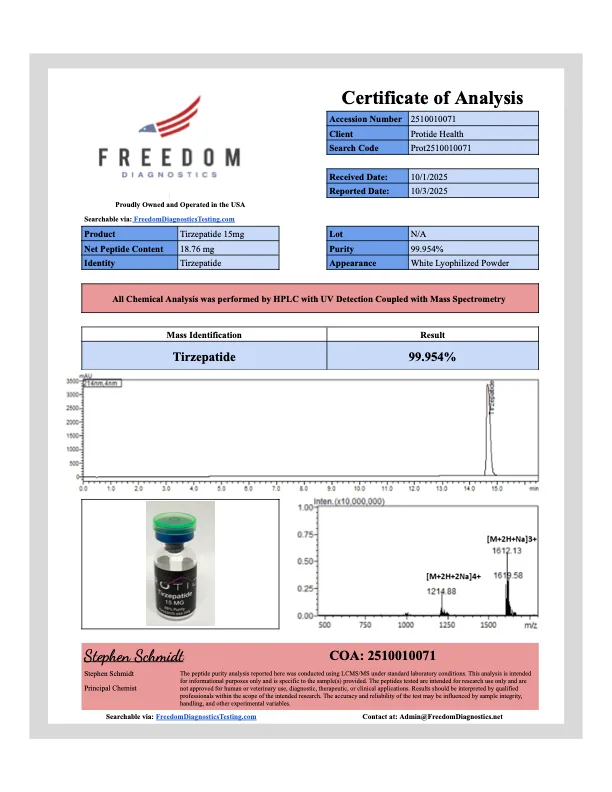
COA
GLP-2 Peptide Specifications Table
ParameterDetailsPeptide NameGLP-2Vial Content15mg (Lyophilized Powder)Peptide TypeSingle peptide (dual GIP/GLP-1 receptor agonist)Typical Use CaseMetabolic, Obesity, and MASLD research modelsStorage GuidanceStore at -20°C or below; protect from lightIntended UseLaboratory research only, not for human use
GLP-2 Peptide FAQs
What is GLP-2 peptide used for in research?
In research, GLP-2 peptide is used to study the combined effects of GIP and GLP-1 receptor activation. This “twincretin” approach allows scientists to investigate insulin response, appetite suppression, and hepatic lipid management in metabolic models. Molecular Metabolism
How is GLP-2 peptide 15mg typically stored in a lab?
Labs store GLP-2 peptide 15mg vials as lyophilized powder at -20°C or lower to ensure long-term stability. Once reconstituted, aliquoting is recommended to avoid repeated freeze-thaw cycles that can degrade the peptide chain.
What is the advantage of a dual agonist in research?
Dual agonists like GLP-2 allow researchers to explore synergistic pathways. While GLP-1 receptor activation is known for glucose control, the addition of GIP receptor agonism is studied for its potential to improve lipid clearance and energy expenditure.
Why Researchers Order GLP-2 15mg from Us
When searching for GLP-2 15mg for sale, quality is paramount. Our products undergo strict testing to ensure chemical stability and experimental reliability.
Key Highlights
- Verified Purity: Tested for maximum research efficacy.
- Fast Shipping: Securely handled and shipped daily.
- Best Value: Competitive pricing for bulk and individual orders.
Detailed Product Specifications
| Product SKU | 74 |
| Weight | N/A |
| Dimensions (LxWxH) | N/A |
| Availability | In Stock |
| Regular Price | $139.0 |
| Brand | nan |
For deeper molecular data, visit the NCBI.
Secure Your GLP-2 15mg Supply
Our GLP-2 15mg is the top choice for labs worldwide. Order today to ensure your project stays on schedule.
Related products

Musculoskeletal Research

Mitochondrial Research

Mitochondrial Research

Musculoskeletal Research

Metabolic Research
Mitochondrial Research

Metabolic Research

Metabolic Research